To make a bedtime story interactive, give your child one small job: a sound, a movement, a line that comes back, an answer, a character, or the hero. Start with the smallest job and move up only if they ask for more.
Below: the six jobs as a ladder, the ladder climbed in a real story, and a quick way to pick tonight’s rung. The examples come from our retellings of classic tales for children of about 3 to 6, but they work with almost any picture book.
Interactive doesn’t have to mean loud
Most advice on interactive stories is built for the afternoon: act it out, hop like a frog, make every animal noise. At bedtime you want the same idea at a smaller size. A creak. A tap on the knee. One line, whispered back.
Three habits keep it that way:
- One job at a time. Add the next rung only when your child reaches for it.
- Whisper first. You say the line quietly and they say it back, so nobody has to remember or read anything.
- No marks out of ten. Whatever comes out is the right answer, and the story carries on.
The participation ladder: six rungs, from one sound to a whole role
Each rung asks a little more of your child than the one below. The examples are from The Billy Goats and the Troll and The Tortoise and the Hare.
| Rung | Your child | Try it with |
|---|---|---|
| 1. A sound | Makes one quiet sound each time you say a word | A creak whenever you read “bridge” |
| 2. A movement | Does a small action along with you | Tapping both knees for “Trip, trap.” |
| 3. A line that comes back | Says the same short line each time it returns | “And step. And step. And step.” |
| 4. A question | Answers in their own words | “Who do you think is on the troll’s bridge?” |
| 5. One character | Says every line of one character | The troll: “Nobody crosses.” “Nobody.” |
| 6. The hero | Plays the lead, with lines through the story | The smallest goat, under their own name |
Staying on a low rung isn’t slow. Plenty of evenings call for rung 2 and nothing more.
The ladder in a real story: Billy Goats Gruff, step by step
Here is one story climbed from the bottom, with the lines exactly as they are in our retelling.
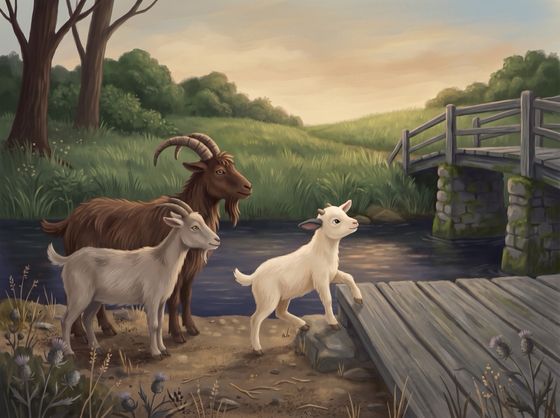
- A sound. The bridge is “old and grey and loud”. Ask your child to make it creak, very softly, whenever you read the word bridge.
- A movement. In scene 3 the smallest goat’s hooves are “loud on old wood”. Tap your knees together for each “Trip, trap.”
- A line that comes back. In scene 5 the smallest goat says “Wait for my brother.” In scene 6 the middle goat says it again, only slower. Let your child say it both times: small the first time, slow the second.
- A question. Stop after the troll roars “WHO is walking on MY bridge?” and ask who it is. Take any answer, then read the story’s own: “Only me.”
- One character. Give them the troll. He has three lines: “Nobody crosses,” “Nobody” and “WHO is walking on MY bridge?” Whisper each one and let them roar it. For a smaller part, the big goat has a single line: “Come up, then.”
- The hero. The smallest goat speaks in five of the eight scenes. Your child says each line after your whisper, and the story is theirs from the first scene to the last.
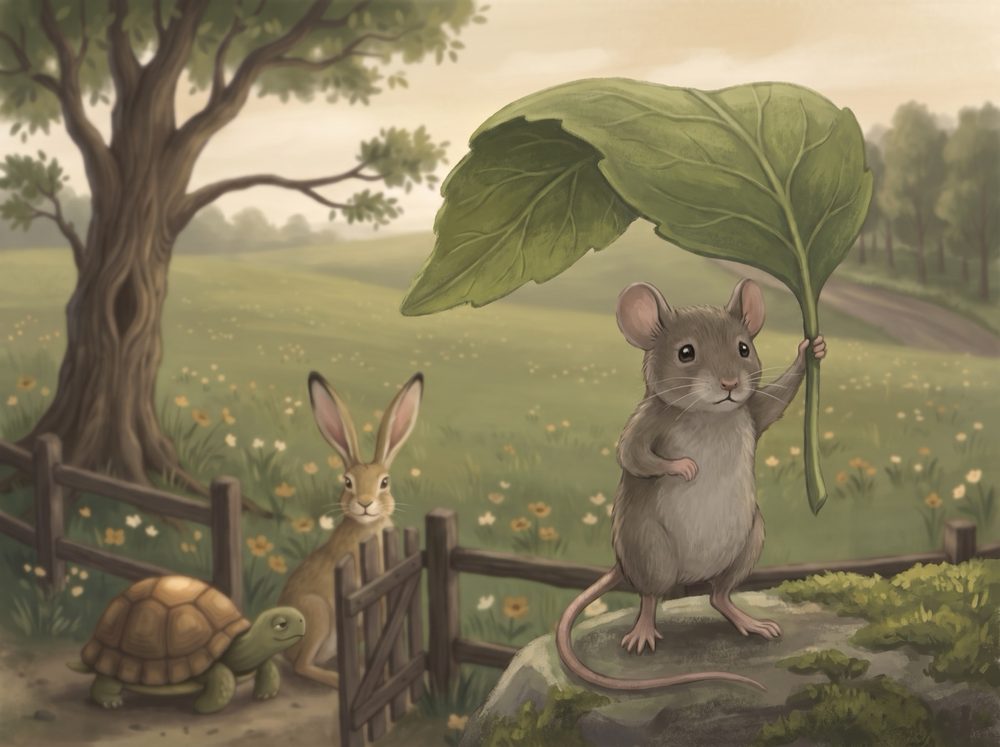
The Tortoise and the Hare works the same way. In scene 7 the tortoise climbs the whole hill on one repeating line: “Step,” and then “And step. And step. And step.” Leave a pause after each step and see whether your child fills it.
How to pick a rung for a 3, 4 or 5 year old
Age is a rough guide, and tonight’s mood is a better one. Some three-year-olds will happily play the troll, and some five-year-olds only want to tap your knees. Match the rung to the evening.
| Tonight your child is | Try | You say |
|---|---|---|
| Tired and quiet | Rung 1 or 2 | “Can you make the bridge creak?” |
| Wriggly | Rung 2 | “Tap the hooves on your knees.” |
| Chatty | Rung 4 | “What would you say to the troll?” |
| Full of opinions | Rung 5 | “You be the troll. I’ll whisper your lines.” |
| Asking for this story again | Rung 6 | “This time you’re the smallest goat.” |
If a rung doesn’t work, step down one and try again tomorrow. Nobody is keeping score.
When you want to keep it: record it
Left alone, every rung is gone when the book closes. To keep tonight’s version, record it. A voice memo or a video catches everything, and a story app that records in pieces lets you redo one slip without redoing the story. Both are covered in how to record a bedtime story for your child, and the Billy Goats Gruff script is a ready-made story with every part marked. For the whisper method itself, see how to do voices when reading to kids.
Nanuli is built for the top of the ladder. You pick a story and your child plays the hero under their own name. On the “Who plays whom?” screen you can hand them any other character too, each shown with its number of lines. They say each line after your whisper, you read the rest, and the story plays back with the pictures moving to your voices. Every line for your child is short enough to say after one whisper.
Away for a few nights? Rungs 5 and 6 still work if you record before you go. See bedtime stories when you’re away.