You don’t need accents to do voices. You need one clear difference between each character and the narrator, and the same one every time. Below: four things you can change, a cheat sheet for five classic characters, and a way out if you still can’t, which is to hand the voice to your child.
The examples come from retellings of classic tales, so you can borrow them for almost any picture book. They suit children of about 3 to 6.
You don’t need accents: four things to change
A voice is made of speed, volume, pitch and pauses. Pick one per character, turn it, and leave the rest alone. Keep your own voice for the narrator: it’s the plain background that makes every other voice stand out.
- Speed
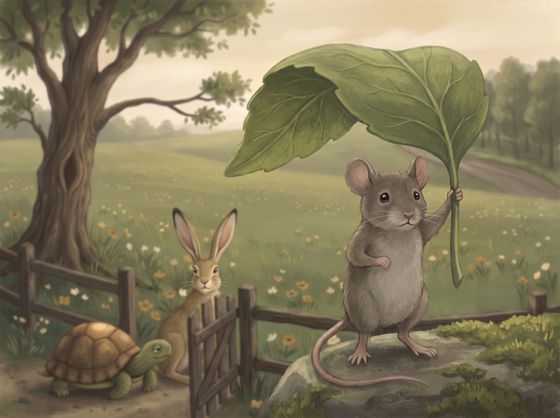
Hare: quick, words tumbling out
Tortoise: slow, never in a hurry
- Volume
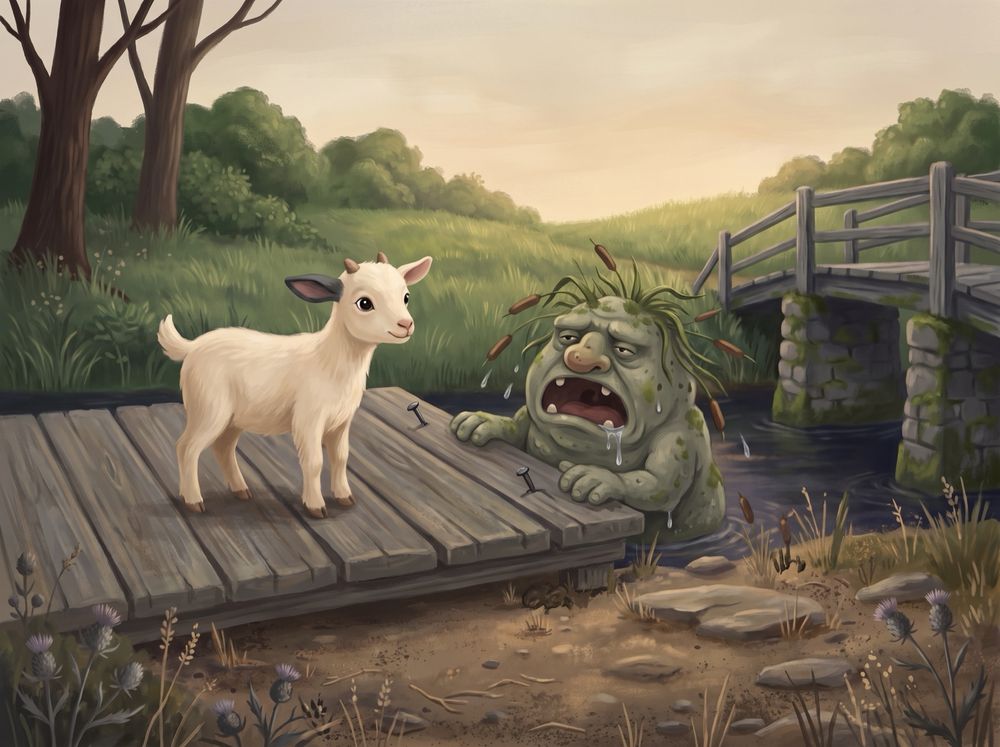
Troll: a roar, or at bedtime a growl
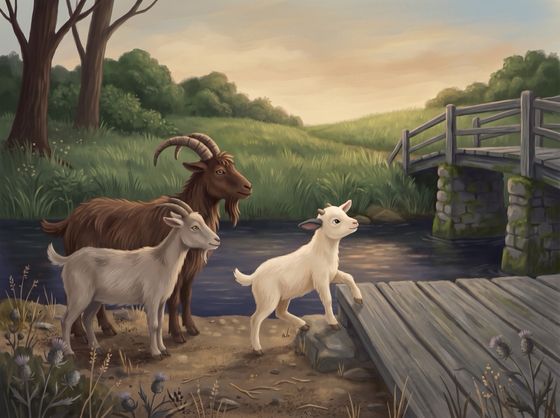
Smallest goat: nearly a whisper
- Pitch
Troll: low, from the chest
Smallest goat: thin and high
- Pauses
Troll: wait a beat before answering
Tortoise: one step, a breath, the next
One dial is easy to repeat when you’re tired, and your child will notice if a voice changes from page to page.
A cheat sheet for five classic characters
Try these tonight, or borrow the idea for any book. One dial each, and a line to practise on.
| Character | Turn this | Practise on |
|---|---|---|
| The troll The Billy Goats and the Troll | Pitch Low, from the chest | “Nobody crosses. Nobody.” Pause after “crosses”. |
| The smallest goat The Billy Goats and the Troll | Volume Nearly a whisper | “Only me… I am very small.” |
| The hare The Tortoise and the Hare | Speed Fast and a little smug | “Nobody here can beat me.” |
| The tortoise The Tortoise and the Hare | Pauses A breath between steps | “One step. Then the next one.” |
| The town cousin The Town Mouse and the Country Mouse | Pitch A little high, a little bored | “Is this it? Is this the whole of it?” |
Say the line out loud a few times before you open the book, so the voice is ready when the character turns up. For a book that isn’t on this list, read it once first and pencil a dial next to each character’s first line: troll, low; goat, tiny. Skip anyone who speaks only once.
Keep bedtime voices low and slow
A roar is fun at five o’clock. At bedtime, take every voice down a notch: the troll growls, the goat whispers, and the pauses get a little longer. You’re not performing for a crowd, you’re sitting next to a tired person.
A silly warm-up that loosens you up
Say “good morning” as a tiny mouse, then as a giant, then as a very sleepy bear. Do it in the car or while the bath runs. Thirty seconds is plenty, and nobody has to hear it.
If you still can’t: hand the voice to your child
When your child has a character of their own, you stop performing for an audience and start reading with a partner. For children who can’t read yet, use the whisper:
- Pick a part with short lines. The troll’s “Nobody crosses” and “Nobody” are about as short as a line gets.
- Whisper the line to your child.
- Let them say it back in the character’s voice, as big as they like.
- Carry on with the narration. Don’t comment on how it sounded.
Because you whisper first, your child never has to read or remember anything. Offer the troll first: a big grumpy voice is easy to do and hard to do badly. More small steps are in how to make bedtime stories interactive.
For a whole story built this way, see the Billy Goats Gruff script for a parent and child.
Play it again tomorrow
A good reading is over when you close the book. If you want it to last past tonight, Nanuli puts the parts on screen: you choose who plays whom, you read the narration, your child says their lines after your whisper, and the app records everyone and plays the story back with the painted scenes moving to your voices. Your child can play it again tomorrow, or on a night you’re away. To record a story in small pieces yourself, start with how to record a bedtime story for your child.